India signs peace deal with Nagaland separatists after 60 years of war

India has signed a peace agreement with a leading tribal separatist group in country’s remote northeast that had waged guerrilla war for six decades against central rule from New Delhi.
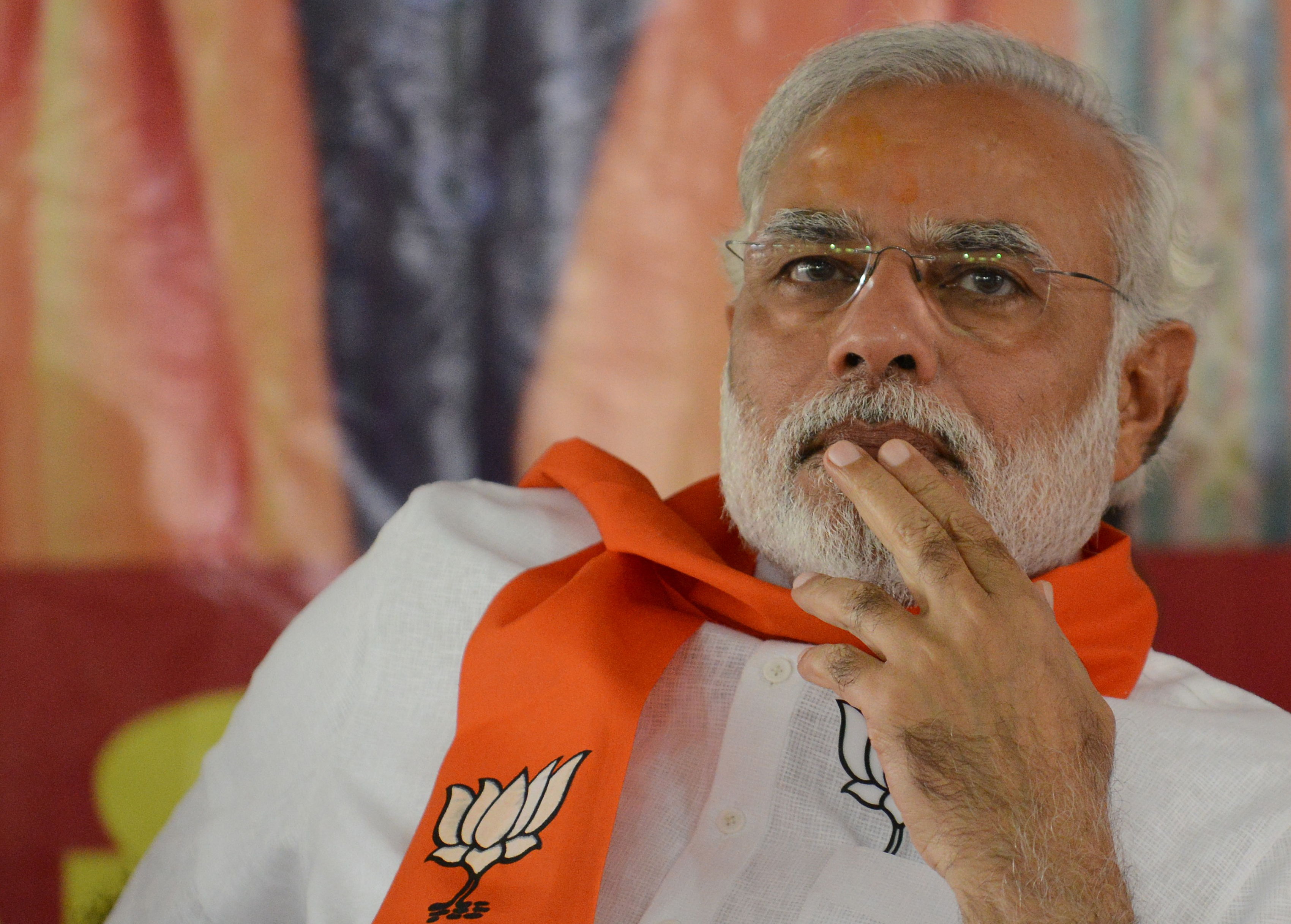
Officials from Indian prime minister Narendra Modi’s government signed the accord with the National Socialist Council of Nagaland (NSCN-IM) on Monday, concluding peace talks that began in 1997.
«We are making a new beginning today … 60 years is a long time of fighting, the wounds are deep,» Mr Modi said at a televised news conference alongside the NSCN-IM secretary-general Thuingaleng Muivah, a co-founder of the rebel group.
NSCN-IM is one of several separatist groups active in the remote and underdeveloped northeastern region bordering on China, Burma, Bangladesh and Bhutan.
It has been fighting for an independent ethnic Naga homeland uniting parts of the mountainous northeast with areas of neighbouring Burma, where it runs a government-in-exile. At least one other Naga faction remains at war with New Delhi.
The terms of the agreement were not immediately known. Mr Modi’s government has said it wants to develop the region, which has long felt neglected by the rest of the country, by pumping in development funds and building better infrastructure.

«Since becoming prime minister, peace, security and economic transformation of the northeast have been among my highest priorities. It is also at the heart of my foreign policy, especially Act East,» Mr Modi said, referring to efforts to forge closer ties with Southeast Asia.

Militants in the northeast have stepped up attacks against India’s armed forces this year. Guerrillas killed 20 soldiers in Manipur state, which borders Nagaland, in June in the deadliest attack on security forces in the area in two decades.

The unrest has killed more than 170 people, most of them militants, in the northeast this year, according to the South Asia Terrorism Portal. Last year, 465 people were killed.

Militant violence is declining across India, but the country is still fighting separatists in disputed Kashmir state in the northeast, as well as Maoist-inspired groups operating across a swathe of the east.

«Our oldest, insurgency is getting resolved, it is a signal to other smaller groups to give up weapons,» Mr Modi at the signing ceremony in his official residence.

Source: http://www.telegraph.co.uk/news/worldnews/asia/india/11780739/India-signs-peace-deal-with-Nagaland-separatists-after-60-years-of-war.html
Why India and ASEAN Relations Are Set to Prosper

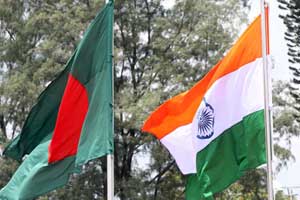
The current economic relationship between India and ASEAN countries presents a multitude of industrial, commercial, and investment opportunities.  India has welcomed ASEAN’s plans to establish economic and political relationships with neighboring nations, and India and ASEAN have increasingly supported bilateral trade, promoted foreign investment, and strengthened diplomatic relations.

Bilateral trade between India and ASEAN totaled US$80 billion in 2014, up ten billion from 2012 and increasing by an average annual rate of 23 percent over the past decade. A large portion of India and ASEAN’s surging economic and political relationship can be accredited to two things: India’s “Act East” policy, which reaffirmed India’s plans to engage more substantially with the economies of its Southeast Asian neighbors; and rising business optimism within ASEAN, as outlined in the latest ASEAN Business Optimism Index by Dun & Bradstreet.

Singapore

Singapore is India’s strongest connection to the ASEAN market, accounting for 25.9 percent of all of India’s trade with ASEAN from 2013-2014. The city state has also benefited economically from its tight relationship with India, from which it imported USD 7.1 billion in 2014.

In addition to a healthy trade relationship, Singapore and India also enjoy a diplomatic political history of over 50 years. In 2014, Singapore and India again strengthened defense partnerships and recommitted to the practice of joint military training exercises.

As India’s portal to the rest of ASEAN, Singapore is likely to enjoy a mutually beneficial economic and political relationship with India for multiple upcoming decades.

Vietnam
Vietnam and India have also sought to strengthen their economic and political standing. Vietnam’s 2014 renewal of Indian oil blocks in the South China Sea is indicative of improved diplomatic and defense relations between the two nations.

The economies of India and Vietnam are anticipated to increasingly rely on one another for trade in the upcoming years. From 2013-2014, bilateral trade between Vietnam and India totaled USD 8.03 billion, and both countries’ governments predict this number to reach US$15 billion by 2020. In terms of exports from Vietnam to India, large investment opportunities exist in the textile and pharmaceutical industries.

Indonesia
India and Indonesia’s economic relationship has grown exponentially in recent years. After signing a double taxation agreement (DTA) in 2012, bilateral trade between the two countries totaled US$20 billion. In 2012, the Indian embassy in Jakarta launched the India Business Forum, in which Indian business owners committed to further interaction with the Indonesian market.

In 2014, Indonesia accounted for 38 percent of ASEAN’s total GDP. By increasing trade with Indonesia, India will gain significantly greater access to the Southeast Asian economy. At the same time, India’s population of over 1.27 billion presents a large market for the ASEAN countries’ primary exports of oils, gas, and electronic equipment.

Room for Growth
It remains to be seen how the ASEAN region will respond to India’s recent initiatives to improve economic and political relations. Although the last several years have seen considerable development in India-ASEAN relations, there is further room in these markets for significant growth in the coming years.


Source: http://www.india-briefing.com/news/theact-east-policy-business-optimism-asean-india-southeast-asia-deepen-bilateral-relations-11101.html/

India’s Modi backtracks on pro-business land bill

Indian Prime Minister Narendra Modi has agreed to drop politically unpopular clauses from a pro-business land bill, a move that will fuel worries among investors that the slow pace of economic reforms is hurting long-term growth prospects.

Tussles over land acquisition have locked up hundreds of billions of dollars of infrastructure developments. The bill was meant to make it easier to acquire land and help realize Modi’s vision of building modern cities and industrial corridors.

But opposition parties have successfully portrayed the proposed changes, including exemption from getting consent of 80 percent of landowners for some projects, as anti-farmer. That is a damaging charge in a country that is still mostly rural.

Moody’s and Fitch unit BMI Research warned last week that delays in promised reform were affecting investor sentiment and the economic outlook.

In December, Modi issued a temporary executive order that allowed the government to forcibly buy farmland for industrial development. He reissued the order twice, and each time it lapsed without parliamentary approval.

After failing to garner wider support for the measure, lawmakers of the ruling Bharatiya Janata Party (BJP) said they would not press ahead with the contentious clauses of the bill.

«You may call it a U-turn, or a political course correction, but we have decided to accept the consent clause because it will protect the farmer’s right over his land,» said a senior member of the BJP.

The retreat is another blow to Modi’s ambitious economic reform agenda that has been stalled by a logjam in parliament.

The discord in parliament has almost ruled out the passage of landmark tax reform in the current session of parliament, which ends on Aug. 13.

In a note last week, BMI Research said the slowing pace of reforms has made Indian shares «precarious» and a deeper correction appears in the offing.

The NSE index is up nearly 3 percent this year compared with a 31 percent gain in 2014.

The land bill was expected to be a catalyst to speed up economic growth as lengthy delays in acquiring land have made firms wary of committing fresh investments.

With the BJP facing a tough election in Bihar, which is among the poorest states in the country and has predominantly an agrarian economy, championing the proposed reforms could have cost crucial votes.

«We hope the opposition and farmer groups now accept the bill with the latest amendments and finally approve it,» said another senior BJP politician.

Source: http://www.reuters.com/article/2015/08/04/us-india-reform-land-idUSKCN0Q91C520150804

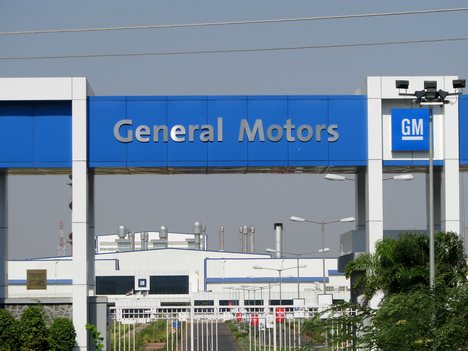
GM invertirá 1,000 mdd en la India.

General Motors Co invertirá 1,000 millones de dólares en los próximos años para convertir a las operaciones en la India en un nuevo centro global de manufacturas y exportaciones, con el objetivo de elevar las ventas en mercados emergentes de rápido crecimiento, dijeron este miércoles altos ejecutivos.

La inversión es parte del plan de GM de invertir 5,000 millones de dólares en varios años para desarrollar una familia global de vehículos Chevrolet con Shanghái Automotive Industry Corp (SAIC), la automotriz estatal china que es el principal socio de GM en la segunda mayor economía del mundo.

La presidenta ejecutiva de GM, Mary Barra, dijo en una conferencia de prensa en Nueva Delhi que se esperaba que la inversión en la India creara 12,000 puestos de trabajo en la firma y en sus proveedores en la tercera mayor economía de Asia.

GM también va a lanzar 10 vehículos de manufactura local en la India en los próximos cinco años, en un esfuerzo por duplicar su participación de mercado en el país al 2020, dijo en una conferencia de prensa el jefe de operaciones internacionales de la automotriz, Stefan Jacoby.

GM vendió 56,700 vehículos en la India en 2014 y tuvo una participación de mercados de 1.8 por ciento.

Fuente: http://bit.ly/1VX5f0h 

Uber invertirá 1.000 millones en la India.

Uber, el servicio de auto con chofer vía teléfono celular, anunció una inversión de 1.000 millones de dólares en la India en los próximos nueve meses para ampliar sus servicios y productos, informaron diversos medios el viernes.

Según la agencia Press Trust of India, el titular de Uber India, Amit Jain, dijo que se utilizará la inversión para mejorar las condiciones y crear una red de apoyo al cliente más eficiente.

La compañía perdió su licencia para operar en la capital de la India el año pasado cuando uno de sus conductores fue acusado de violar a una pasajera de 26 años. La prohibición fue derogada hace varias semanas.

Uber conecta a los usuarios con los conductores por medio de una app para teléfono celular y significa una alternativa al taxi tradicional.

“India es una de las grandes prioridades de Uber”, dijo Jain en un comunicado, y añadió que en junio se anunció una inversión de monto similar para China.

Uber espera llegar a la cifra de 1 millón de viajes por día en este país que supera los 1.200 millones de habitantes. La compañía planea extender sus servicios más allá de las 18 ciudades donde opera en la actualidad. Con ello, la India pasará a ser el mayor mercado geográfico de Uber, superior incluso a Estados Unidos, su país de origen.

“Seguimos viendo un crecimiento robusto del 40% mes a mes”, dijo Jain, y añadió que aspira a un crecimiento aún mayor.

Fuente: http://bit.ly/1hfNLfR